A wasp nest in the ground is treated at the entrance hole, not at the nest. An insecticidal dust goes into and around the opening, returning foragers carry it down into the chamber on their feet, and the colony dies out over the following hours. It is one visit, £60 fixed, and nothing is dug up. Where we can, we work at dusk or first light, because that is when almost the whole colony is at home.
How to tell you have a ground nest
The thing that distinguishes a ground nest from general wasp nuisance is traffic through a single point. Stand ten metres back in good light and watch for a couple of minutes.
- One hole, two-way traffic. A steady stream in and a steady stream out of the same opening, often several a second by August. Wasps scattered across a garden feeding on windfall apples are foragers from somewhere else.
- A low, straight flight line. Wasps leaving a ground nest climb away at a shallow angle along a consistent bearing. Follow the line backwards and it takes you to the hole.
- They drop in rather than land. A wasp returning to a ground nest goes straight down the hole without pausing. Bees tend to land at the entrance and crawl.
- No visible nest. There is no papery grey football to see. Occasionally there is a scatter of fine soil pellets at the entrance where the wasps have excavated.
- An unremarkable hole. A gap in a lawn, a crack in a bank, the base of a hedge, a hole behind dry stone edging, or an old mouse run under a fence post.
Why ground nests are so common on WA14 and WA16 plots
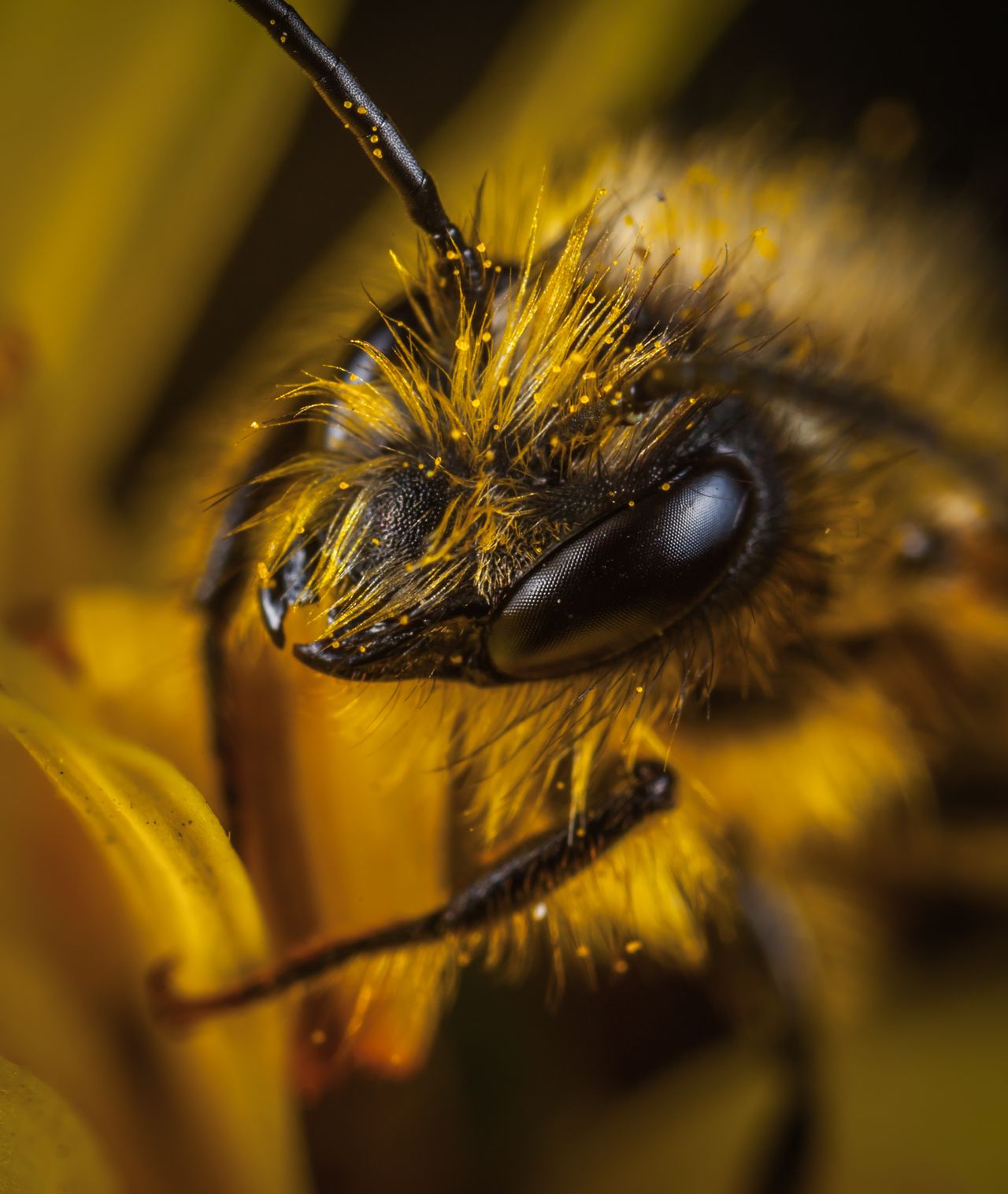
Common wasps regularly nest below ground, and they very rarely dig from scratch. They take over a cavity that already exists and chew it larger. That makes the bigger, older plots on the rural edge of Trafford — the paddocks and long gardens around Dunham Massey, High Legh, Mobberley and the Knutsford lanes — far more productive for them than a tidy suburban lawn.
- South-facing banks. Warm, free-draining and dry underfoot. A queen looking for a nest site in late April will pick a sunny bank over heavy wet clay every time.
- Dry stone edging and old walls. The voids behind loose stonework are dry, insulated and already the right size.
- Abandoned mouse and vole burrows. Pasture and paddock fencing collects rodent runs along the fence line, and those runs are the single most common starting point for a ground nest.
- Hedge bottoms. Undisturbed, sheltered from rain, and awkward to strim — which is exactly why the nest goes unnoticed until someone strims it.
- Under decking, sheds and stacked timber. The same conditions as a bank, with a roof over the top.
The mower and the strimmer
Almost every ground nest we attend has been found by machinery rather than by eye. The reason is simple: the nest is invisible until you are standing on it, and a petrol mower or strimmer puts more vibration into the soil than anything else that happens in a garden. The colony reads that as an attack on the nest.
The failure mode is worth describing properly, because it is not like being stung once by a wasp at a picnic. There is no warning buzz and no single wasp landing on you first. The first sting usually arrives at the same moment as the tenth, and it happens in the middle of an open lawn where there is nothing to get behind. Wasps sting repeatedly, and a disturbed colony releases an alarm pheromone that brings out more workers within seconds.
If it happens: leave the machine where it is, walk away fast in a straight line, and get indoors or into a vehicle. Do not swat — crushing a wasp on your skin releases more alarm pheromone. Do not stop at twenty metres to see if they have given up. For the stings themselves, NHS advice is to wash the area with soap and water, apply something cold for around twenty minutes, and take an antihistamine or painkiller if needed. Call 999 for any sign of a severe reaction — swelling of the face, lips or throat, difficulty breathing, dizziness — or if someone has taken a large number of stings.
In practice, if you are cutting a paddock edge or a long bank in August or September, it is worth walking the line first and watching for traffic. Two minutes of looking is cheaper than the alternative.
The nest is much larger than the hole
People consistently underestimate a ground nest because all they can see is an opening the size of a 2p coin. Below it, a colony that started as a golf ball in May can be well over a foot across by late August, with several thousand workers. The wasps carry the excavated soil out in small pellets and drop them clear of the entrance, which is why the ground around a busy nest sometimes looks lightly scattered with fresh crumbs of earth.
European hornets — which are simply large wasps — occasionally use the same sort of cavity, at the base of a hollow tree or in a bank. They are slower and considerably less inclined to sting than common wasps, and they are treated in exactly the same way for the same fixed fee.
Do not pour anything down the hole
This is the most common thing people try before they call, and all three home remedies fail for the same reason: the chamber is not directly under the hole. The entrance is a tunnel, often turning through a right angle, and liquid poured in stops well short of the nest.
- Boiling water. Loses its heat within the first few inches of soil. What it reliably does is bring the colony out while you are bent over the hole holding a kettle.
- Petrol. A serious fire risk, and pouring fuel into the ground can contaminate soil and groundwater. This one is worth taking seriously on a rural plot with a private water supply nearby.
- Bleach or drain cleaner. Gives off fumes in a confined tunnel, kills the surrounding planting, and still does not reach the colony.
- Blocking the hole. Wasps will chew a new exit, and on a nest under decking or against a foundation the new exit is not always outdoors.
Dogs, horses and livestock
A ground nest is a different order of risk from a nest in the eaves, because it sits at exactly the height an animal investigates. A dog nosing along a hedge bottom, or digging at a hole in a bank, will take stings to the face and mouth. A horse grazing a paddock can put a hoof through the roof of a shallow chamber and take a large number of stings in seconds, with nowhere to go behind a fence line.
If an animal has been stung around the face or mouth, or has taken multiple stings, ring your vet the same day. If you know where the nest is, fence or rope off a radius of a few metres until it is dealt with, and move horses out of that paddock rather than trying to work around it.
Is it definitely wasps?
Three things get mistaken for a ground wasp nest, and two of them need nothing done at all.
Mining bees
Solitary bees that nest individually in short burrows, often dozens together in a dry lawn or a sunny bank. The tell is the pattern: many small holes, each surrounded by a neat little cone of excavated soil, rather than one hole with heavy traffic. They are active in spring, they are effectively harmless, and they are gone within a few weeks. Leave them be.
Bumblebees in an old burrow
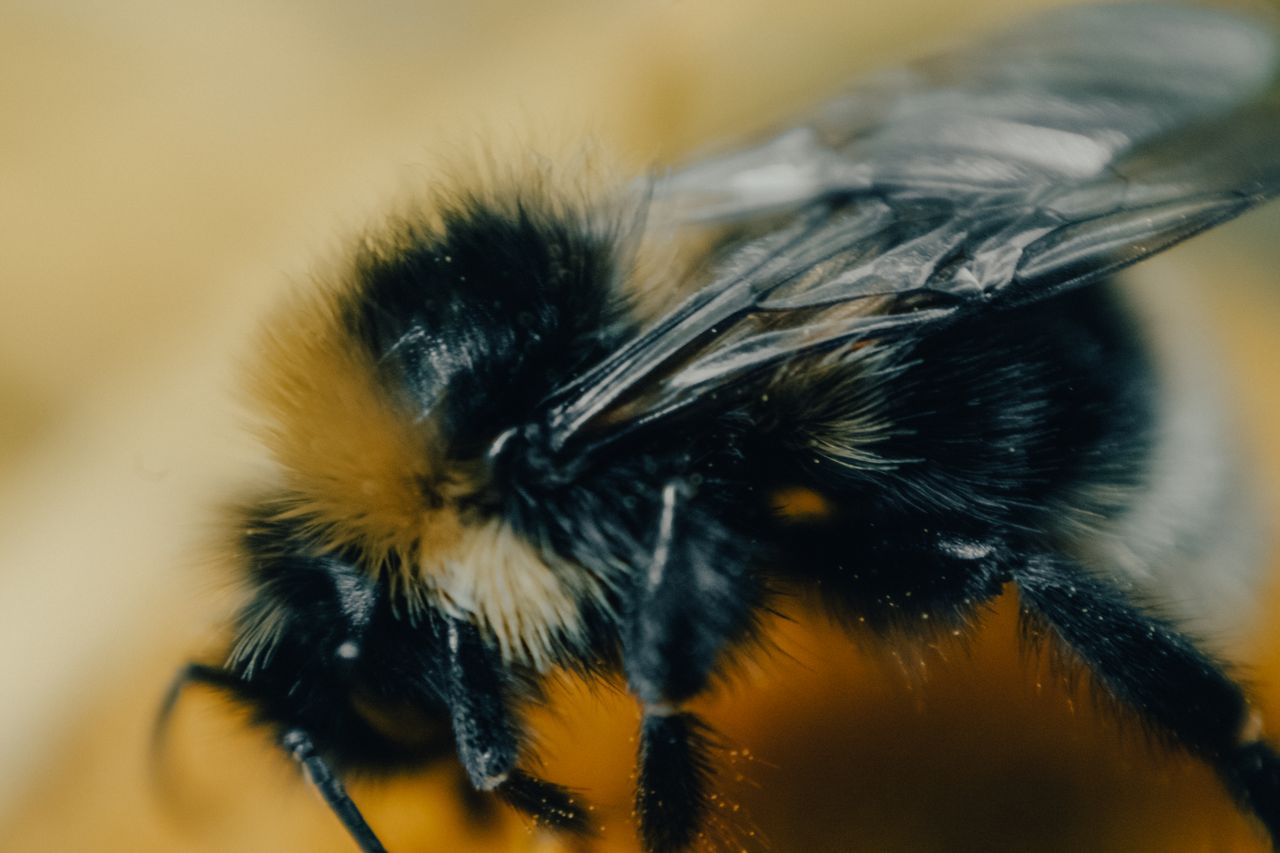
Bumblebees use exactly the same abandoned mouse holes that wasps do, so the location tells you nothing — the insect does. Bumblebees are round, obviously furry, slower, and audible in flight, and a colony is usually a few dozen bees rather than a constant stream. Bumblebee colonies die back naturally at the end of the season and can almost always be left alone, which is the honest answer in most gardens. Where a nest genuinely sits somewhere unavoidable, treatment is £70, and our bumblebee page sets out when that is actually warranted.
Honeybees
Honeybees do not nest in lawns. They occupy large dry cavities such as chimneys, wall voids and hollow trees, and they are not something we treat. If you have found a hanging cluster of bees on a branch or fence post, that is a swarm rather than a nest, and a local beekeeper may collect it.
When you genuinely do not need us
If the nest is at the far end of a paddock or in a hedge bottom nobody walks past, no children or animals go near it, and it is late September or October, it will collapse on its own within weeks. Wasps are useful predators for most of the summer, and an undisturbed ground nest in a field corner is not doing any harm. Treat the ones that sit on a mowing line, near a path, by a doorway, in a paddock, or anywhere a dog goes.
What the hole looks like afterwards
Nothing is excavated, so the ground is left as it was. Expect continued activity at the entrance for an hour or two while foragers return, then a sharp drop-off, and silence within about twenty-four hours. Leave the hole open for the first day or two so returning wasps walk through the treated entrance. After that you can tread it in or top it up with soil. The nest below is paper and rots down. It will not be reused — but a dry south-facing bank that suited one queen may well suit another in a future spring, so it is worth remembering where it was.
Wasps coming out of a hole in the ground?
£60 fixed fee, same-day across Altrincham and Trafford. Mark the spot from a safe distance and leave it alone until we arrive — you do not need to get close enough to be certain.
Call to BookIf you are not sure what you have got, a photo of the hole and the flight activity is usually enough to tell. Send it through the contact form or message it to 07770 015197 and we will tell you whether it needs treating or whether it is one to leave alone.
Frequently Asked Questions
A ground wasp nest costs £60, the same fixed fee as a nest in a roof or a shed. That covers the visit and the treatment, and it is one visit — the nest is not dug up, so there is no extra charge for access or reinstatement. Hornets, which are simply large wasps, are treated the same way for the same price.
No. Boiling water cools within the first few inches of soil and never reaches the chamber, so all it does is send several thousand wasps out at your feet. Petrol is a serious fire risk and pouring it into the ground can pollute soil and groundwater. Bleach gives off fumes, kills the surrounding planting, and does not reach the nest either.
Leave the mower, walk briskly away in a straight line and get indoors or into a car. Do not swat or flail — crushed wasps release an alarm pheromone that recruits more of the colony within seconds. Wasps will follow for twenty or thirty metres across open ground, so keep moving rather than stopping to look back.
Count the holes. Mining bees make many separate small holes, each with a little volcano of soil, and they are active in spring rather than late summer. A wasp or bumblebee colony uses one hole only. If the insects going in are furry, slow and audible, and there are a few dozen rather than a constant stream, it is bumblebees — and a bumblebee colony can usually be left to die back on its own.
Far bigger than the entrance suggests. The hole is often no wider than a 2p coin, but by late summer the chamber below can be well over a foot across and hold several thousand workers. Ground nests generally sit shallow, within the first foot or two of soil, because the wasps expand a cavity that was already there rather than digging from scratch.
No, and it is better not to for the first day or two. Returning foragers need to be able to walk into the treated entrance for the colony to be finished off properly. Once activity has stopped, the hole can simply be trodden in or topped up with soil. The nest itself is paper and rots away underground.
Not the same colony — a wasp nest is single-use and the workers die off in autumn, leaving only new queens who hibernate alone elsewhere. But the spot itself can be chosen again. A dry, south-facing bank riddled with old rodent runs is attractive to a queen every spring, so the same field edge or border may produce a new nest in a different year.